Dental bonding can quickly improve small chips, gaps, uneven edges, and localized discoloration, often in one visit and with little or no removal of healthy enamel. It is usually more affordable and conservative than porcelain veneers, but the resin can stain, chip, and wear over time, so the right choice depends on the tooth, your bite, and the result you want.
If you're weighing whether dental bonding, veneers, or other esthetic fixes will meet your goals, a cosmetic dentistry consultation can clarify the best, most conservative option for your situation. Dental Studio of Palm Harbor in Palm Harbor, FL offers personalized treatment planning and shade-matching to help you choose durable, natural-looking results.
Dental bonding, also called composite bonding, uses a tooth-colored resin that a dentist shapes directly on the tooth. The material is hardened with a curing light, refined, and polished to blend with the surrounding smile.
Dental bonding may be a good option for:
Bonding improves the visible surface of a tooth. It does not move teeth or treat deeper problems such as major crowding, a significant bite issue, extensive decay, or a tooth weakened by a large fracture.
The best option depends on how much of the tooth needs treatment, how much strength is needed, and how long you want the cosmetic change to last. The most conservative treatment that can predictably meet the goal is often the best place to start. See crowns vs. veneers.
Option | Common Use | Tooth Preparation | Typical Longevity |
|---|---|---|---|
Composite bonding | Small chips, gaps, shape changes, and localized discoloration | Often minimal or none | Commonly about 3 to 10 years |
Porcelain veneer | Broader changes in color, shape, size, or symmetry | Usually some enamel removal | Often about 10 to 15 years or longer |
Crown | Heavily damaged, decayed, cracked, or weakened tooth | Substantial reshaping | Often about 10 to 15 years or longer |
Orthodontic treatment | Crowding, spacing, or bite concerns caused by tooth position | No reshaping for movement itself | Tooth movement can be lasting with proper retainer use |
These ranges are general estimates, not guarantees. Longevity depends on bite forces, oral habits, diet, hygiene, material choice, and how much of the tooth is being rebuilt.
Porcelain usually resists stains and keeps its polish better than composite resin. Veneers and crowns usually cost more, take more treatment steps, and involve more change to the natural tooth, while more extensive repairs are handled through restorative dentistry.
If tooth position is the main issue, orthodontic treatment such as Invisalign may be the better fit. For pricing context, see veneers cost.
The main benefits of dental bonding are speed, conservative preparation, and repairability. Many cosmetic cases can be completed in one visit, and damaged resin can often be reshaped or replaced without remaking an entire porcelain restoration.
The tradeoff is durability. Composite resin is less resistant to staining and fracture than porcelain, especially on biting edges or in areas under heavy pressure.
Coffee, tea, tobacco, and other strongly pigmented products can gradually discolor the material. Unlike natural enamel, bonding material does not respond to tooth-whitening products, so whitening is often done first when both treatments are planned; review teeth whitening options when considering timing.
Bonding can also lose some surface gloss over time. Professional polishing may help in some cases, but deeper stains, worn edges, or fractures may require repair or replacement.
Dental bonding commonly lasts 3 to 10 years. Smaller bonded areas that are protected from heavy bite forces may last longer than bonding used to rebuild a large front-tooth edge.
Clenching, grinding, nail biting, chewing ice, and using teeth to open packages all raise the risk of chipping. If grinding is a concern, see fix grinded teeth; a dentist may also recommend a custom night guard, though it cannot remove every risk.
Daily brushing with fluoride toothpaste, cleaning between teeth, and regular dental visits help protect both the bonded area and the tooth underneath. Avoiding abrasive products and not biting hard objects with bonded front teeth can also help the restoration last longer.
Your dentist first checks the tooth, bite, gums, and nearby teeth to make sure bonding can give a stable result. X-rays may be needed if decay, a fracture, or another problem is suspected below the surface.
During treatment, the dentist selects a resin shade and prepares the tooth so the material can bond properly. The resin is placed in layers, shaped, hardened with a light, and polished.
Anesthetic is often unnecessary unless decay, sensitivity, or tooth reshaping is involved. Many appointments take about 30 to 60 minutes per tooth, though timing depends on the number of teeth and the complexity of the case.
There is usually little or no recovery time. Mild temporary sensitivity can happen, but persistent pain, worsening sensitivity, swelling, a rough edge, or a bite that feels high should be checked by a dentist.
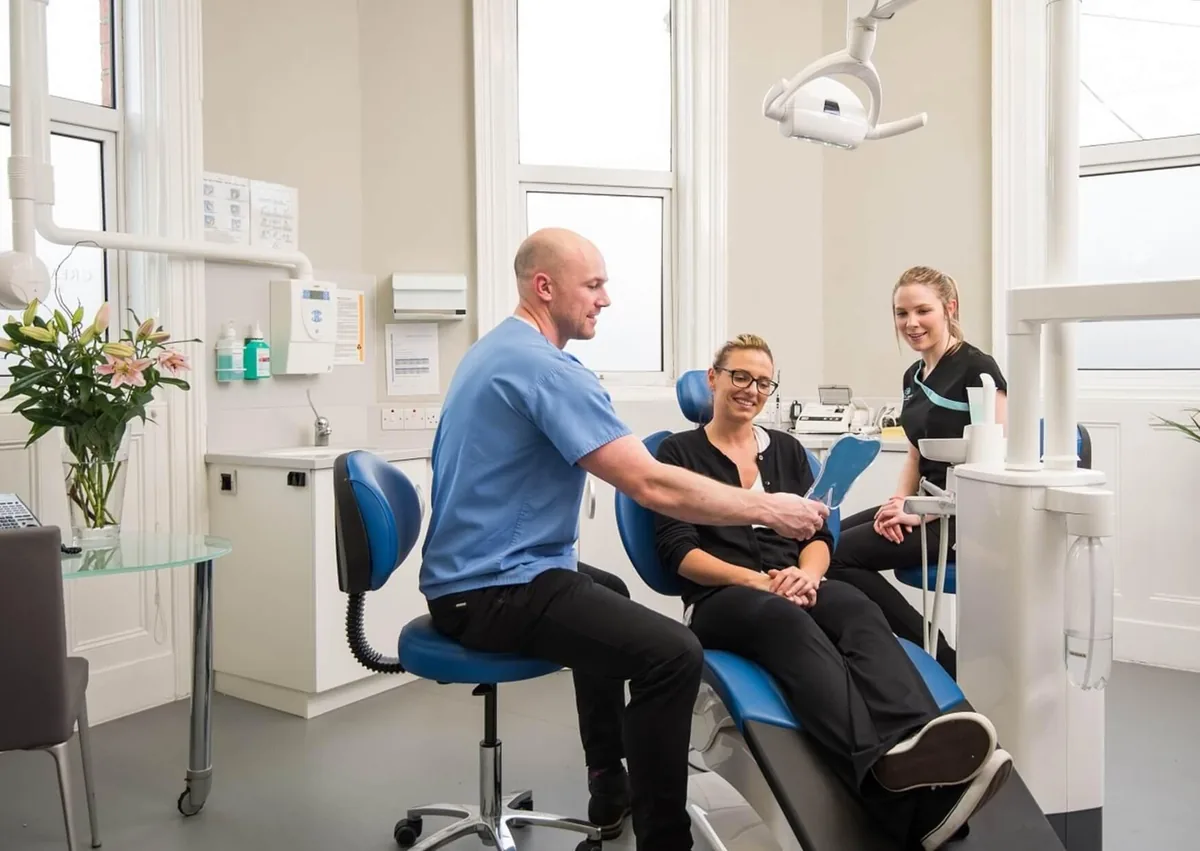
Dental bonding usually works best for patients with healthy teeth and gums, enough enamel for adhesion, and a limited cosmetic concern. It can look very natural, but it may not match porcelain for translucency, stain resistance, or long-term stability.
Active cavities, gum disease, severe enamel loss, major fractures, or uncontrolled grinding may need treatment first. A large defect or weakened tooth may be better treated with a veneer, onlay, or crown, while orthodontic care may be better for significant spacing or alignment concerns.
It makes sense to schedule a consultation when a chip, gap, uneven edge, or discoloration affects your smile, or when older bonding becomes stained, rough, loose, or fractured. Prompt dental care is more important than cosmetic planning if you have significant pain, swelling, drainage, facial injury, a loose adult tooth, or a deep fracture.
A clinical exam helps your dentist evaluate enamel, bite forces, tooth health, color, and the size of the proposed change. That assessment can show whether dental bonding offers the right balance of appearance, cost, tooth preservation, and longevity.
To discuss whether bonding, veneers, or another option will suit your goals, request a cosmetic dentistry consultation to review costs, longevity, and shade options. Call Dental Studio of Palm Harbor for cosmetic dentistry in Palm Harbor, FL at (727) 786-1077 or use online booking to arrange a convenient time.
Bonding often requires little or no enamel removal, which makes it one of the more conservative cosmetic options. Some surface conditioning is needed for adhesion, and removal or replacement should be done by a dentist to help protect the underlying tooth.
Cosmetic bonding is usually comfortable because most treatment is limited to the tooth surface. Local anesthetic may be used if decay is being removed, the tooth is sensitive, or more reshaping is needed.
Bonding can close some small spaces by adding resin to the neighboring teeth. Larger gaps, crowding, bite problems, or spaces caused by gum disease may need orthodontic or other treatment.
Whitening products can lighten natural teeth, but they do not change the color of existing composite resin. If whitening is planned, it is often done first so the bonding shade can be matched to the lighter teeth.
Cost depends on the number of teeth, the complexity of treatment, your location, and whether the procedure is cosmetic or restorative. Dental insurance may help when bonding repairs decay or injury, but purely cosmetic treatment is often not covered.