Digital smile design helps you preview possible cosmetic changes before treatment starts. It uses photos, scans, and planning software powered by dental technology to show how changes in tooth shape, size, position, and smile balance may look, but the preview is a planning tool, not a guarantee of the final result.
If you're comparing treatment options or want to preview cosmetic changes before committing, a cosmetic dentistry consultation can clarify which improvements are realistic for your teeth and face. Dental Studio of Palm Harbor in Palm Harbor, FL can help you understand trade-offs and visualize practical results with digital previews and clear treatment options.
Digital smile design begins with detailed records of your teeth, gums, lips, and face. Your dentist may use facial and intraoral photos, video, X-rays, and a 3D scan instead of traditional putty impressions.
The software can simulate changes such as closing small spaces, evening tooth edges, adjusting proportions, or reducing a gummy-looking smile. Seeing those changes in the context of your full face is often more useful than looking at the teeth alone.
In some cases, the design can be turned into a physical model or a temporary trial smile that fits over the teeth. That gives you a chance to judge the look and, in some situations, how it affects speech before approving irreversible treatment.
Digital smile design does not whiten, straighten, rebuild, or reshape teeth by itself. It is a planning process that may guide whitening, bonding, veneers, crowns, orthodontics, gum contouring, implants, or a combination of treatments.
A realistic plan still has to account for enamel thickness, bite forces, gum health, bone support, and the condition of existing dental work. A screen can show an attractive idea that may need to be adjusted to be safe, stable, and achievable.
Shade is also harder to predict exactly on a screen. Lighting, monitor settings, natural tooth structure, and restorative materials all affect how the final color looks in real life.
If the plan includes crowns, implants, or bridges, coordination with restorative dentistry is often part of the process. That helps confirm structural needs and long-term maintenance before treatment begins.
The right treatment depends on the cause of the cosmetic concern. For example, orthodontics moves teeth into better positions, while bonding and veneers mainly change how teeth look and may not correct every bite or alignment issue.
Option | Often Addresses | Main Limits | Typical Longevity Considerations |
|---|---|---|---|
teeth whitening options | General tooth discoloration | Does not change shape or correct all stains | Results may fade over time depending on diet, habits, and maintenance |
Small gaps, chips, uneven edges, and limited shape changes | Can stain, chip, or wear | Often needs maintenance or replacement sooner than porcelain | |
Porcelain veneers | Color, proportion, shape, and some minor alignment concerns | Usually requires irreversible tooth preparation | Can last many years but may chip or eventually need replacement |
Orthodontics | Crowding, spacing, tooth position, and some bite problems | Requires time and retention after treatment | Tooth position can remain stable with proper retainer use |
Crowns | Heavily restored, weakened, or significantly damaged teeth | Removes more tooth structure than conservative options | May last many years but is not a lifetime restoration |
Gum contouring | Uneven gumlines or excess gum display in selected cases | Depends on gum and bone anatomy | Results may be stable when properly planned |
No cosmetic restoration should be treated as permanent. Bonding, veneers, and crowns may eventually need repair or replacement because of wear, decay, gum changes, trauma, or bite changes.
One of the biggest benefits is clearer communication. Instead of asking for teeth to look “better” or “more even,” you can review details like edge length, symmetry, width, and how much teeth shows when you smile.
Digital planning can also help when several providers are involved. Shared records may make it easier for the dentist, orthodontist, periodontist, oral surgeon, and lab to work toward the same goal.
Still, digital smile design does not remove biological uncertainty. Healthy teeth and gums always come before matching a simulation, and the final result may differ because tissues heal, teeth move, materials behave differently, and facial expressions change the way a smile appears.
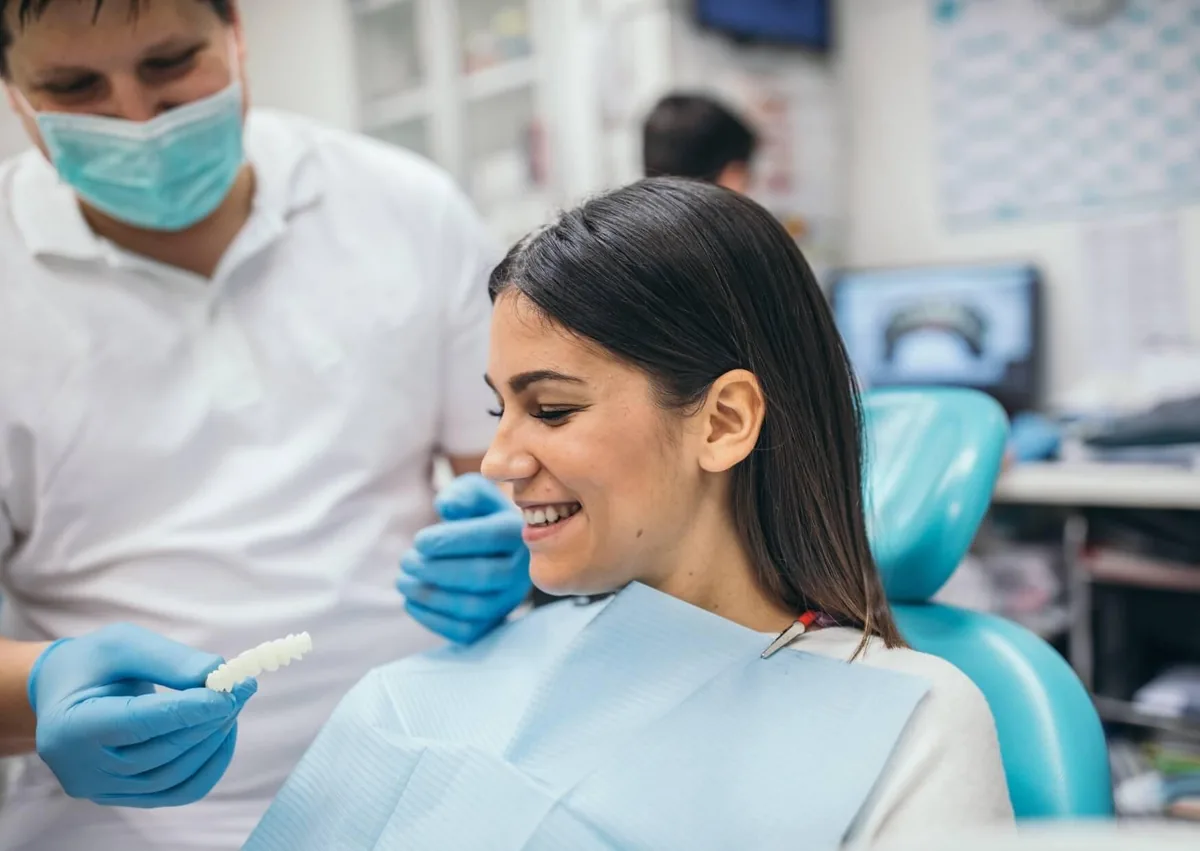
The records appointment is usually simple and noninvasive. Expect photos from different angles, sometimes a short facial video, and a handheld scanner moving around the teeth; X-rays may be added when needed.
At the review visit, your dentist may show one or more designs and explain what treatment each one would require. This is the best time to discuss how natural or uniform you want the result to look, along with cost, timing, maintenance, and whether any tooth structure must be removed.
If a trial smile or provisional version is made, it may feel a little bulky at first. It can also temporarily affect speech or the way your teeth meet, which is exactly why it can be useful before final treatment is completed.
Digital smile design can be especially helpful if you are considering several cosmetic changes or having trouble picturing the result. It is also useful when tooth proportions, gum levels, lip movement, and facial balance all affect the decision.
You may need treatment before cosmetic work if you have active cavities, gum disease, cracked teeth, infection, or an unstable bite. Tooth grinding, smoking, dry mouth, and inconsistent oral hygiene can also affect whether a cosmetic plan is safe and how long it may last.
A consultation makes sense when you have a specific concern, such as discoloration, worn edges, gaps, crowding, asymmetry, or excess gum display, and want to know what is realistic. Reference photos can help explain your preferences, but the final recommendation should be based on your own teeth, facial features, oral health, and goals.
If you have swelling, fever, facial injury, uncontrolled bleeding, severe or worsening pain, or a knocked-out or badly broken tooth, seek prompt dental care instead of waiting for a cosmetic visit. For nonurgent concerns, a full exam can show what is healthy, feasible, and worth previewing with digital smile design.
To move from preview to treatment, request a cosmetic dentistry consultation to review the digital plan, discuss timing, and confirm costs. Dental Studio of Palm Harbor focuses on cosmetic dentistry in Palm Harbor, FL; call (727) 786-1077 or book online to arrange a consultation.
It can accurately capture facial and dental measurements and help guide treatment planning. However, it is still a simulation, and healing, tooth movement, material behavior, and gum response can make the final result look different.
No. The design process itself does not remove tooth structure.
Whether teeth need to be prepared depends on the treatment chosen. Whitening and orthodontics usually require none, bonding often requires little or none, and veneers or crowns commonly require some alteration.
Sometimes, yes. A dentist may offer a removable preview, a temporary mock-up placed over the teeth, or provisional restorations, although not every case or bite can be represented perfectly this way.
Records may be gathered in one visit, but the design review and any trial stage may take additional appointments. The full timeline depends on the treatment plan and can range from a relatively short whitening or bonding case to many months for orthodontics, implants, or multidisciplinary care.
Coverage depends on the plan and the reason for treatment. Cosmetic planning and elective procedures are often not covered, while medically necessary restorative care may be covered in part, so it is best to request a written estimate and confirm benefits with the insurer.