You cannot reliably whiten veneers with bleaching strips, gels, or professional whitening treatments the way you can natural teeth. Professional cleaning or polishing may remove surface stains, but changing a veneer’s underlying shade generally requires replacement or, for some composite veneers, repair or resurfacing.
If your veneers no longer match your natural teeth, cosmetic dentistry can help you explore suitable ways to improve their appearance. At Dental Studio of Palm Harbor in Palm Harbor, FL, an evaluation can help you understand the cause of the color difference and your options.
Key Takeaway: If your veneers look darker, the right option depends on whether the discoloration is on the surface, within the restoration, or beneath it. Before trying whitening, have a dentist identify the cause and explain whether cleaning, repair, or replacement would help your smile look more even.
Table of Contents
Tooth-whitening products use peroxide to break down stain molecules within natural teeth. Veneers are tooth-colored restorations made from porcelain or composite resin, and these materials do not respond predictably to bleaching in the same way.
Porcelain is relatively stain-resistant, but deposits can collect on its surface or around its edges. Composite resin can pick up stains and lose its surface polish over time, making it look duller or darker.
A veneer may also appear discolored because of changes in the bonding material, the underlying tooth, or the gumline. These causes need an examination rather than stronger whitening products.
The least invasive effective option depends on the source of the color change. A dentist should check the veneer’s surface, edges, and surrounding tooth before recommending cosmetic treatment.
Option | What It May Improve | Main Limitation |
|---|---|---|
Professional cleaning | Plaque, tartar, and some external stains | Does not change the veneer’s original shade |
Material-appropriate polishing | Surface staining or dullness, particularly on composite | Cannot correct deep discoloration or every damaged surface |
Whitening natural teeth | Darker natural teeth beside lighter veneers | Does not lighten veneers and may create a mismatch |
Composite repair or resurfacing | Selected stained or worn areas of composite veneers | Suitability depends on the restoration’s condition |
Veneer replacement | An unwanted base shade or an unsuitable restoration | Involves greater cost and intervention than cleaning |
If the problem is surface buildup, professional cleaning may restore a fresher appearance without replacing the veneer. A dentist may also polish a suitable restoration using techniques and materials designed for its surface.
The result is a cleaner version of the existing shade, not a newly bleached shade. How long the improvement lasts depends on the material, surface condition, home care, and exposure to staining foods, drinks, or tobacco.
If your natural teeth have darkened while your veneers still look light, whitening the natural teeth may help restore a closer match. Your dentist can discuss teeth whitening options for the surrounding teeth. If the veneers already look darker than your teeth, bleaching the teeth can make the difference more noticeable.
When whitening and veneer replacement are both planned, dentists generally coordinate whitening first and select the restoration shade after the tooth color has stabilized. The treatment sequence and waiting period depend on the whitening method and restorative materials.
Whitening results on natural teeth can fade over time. Any future touch-ups should be coordinated with your dentist to help maintain the match without expecting the veneers to lighten.
Some composite veneers can be refreshed by repairing or replacing part of the resin. Porcelain veneers with an unwanted base shade generally need replacement if a meaningful color change is the goal.
Replacement is a larger commitment than cleaning because removing an existing veneer can affect the tooth beneath it. Veneers are not lifetime restorations, and future maintenance or replacement may be needed even after a good cosmetic result.
Repair and replacement do not prevent future staining or other dental changes. Their durability depends on the restoration’s condition, the supporting tooth, your bite, and ongoing care.
Start with a dental evaluation rather than booking whitening alone. The dentist may review older photographs or treatment records to determine whether the veneer changed or the surrounding teeth changed instead.
Cleaning and polishing usually involve pressure, vibration, or brief sensitivity rather than tooth preparation. Repair or replacement may require local anesthesia, and replacement may involve temporary veneers and additional visits, depending on the method used.
Whitening natural teeth can cause temporary tooth sensitivity or gum irritation. Tell your dentist about existing sensitivity, exposed roots, or previous whitening reactions before starting.
Pro Tip: Bring 3 things to your consultation: an older smile photo, the names of any whitening products you use, and veneer records if available. These can help your dentist assess the change and coordinate care if another office placed the veneers.
Whitening toothpaste primarily removes surface stains; it does not bleach the underlying color of a veneer. Ask your dentist which toothpaste is appropriate for your restoration material, especially if you have composite veneers or exposed veneer edges.
Avoid aggressive scrubbing, charcoal powders, and acidic DIY mixtures. Abrasive products can roughen restoration surfaces, while acids can damage exposed natural tooth structure and irritate tissues.
Watch Out: Avoid these 2 shortcuts: repeated bleaching to chase a veneer’s shade and abrasive DIY polishing. Neither reliably lightens the veneer, and both can create problems that require professional care.
To help maintain the appearance, brush with fluoride toothpaste, clean between your teeth daily, and keep recommended dental visits. Rinsing with water after staining drinks may help reduce residue, but it cannot prevent every color change.
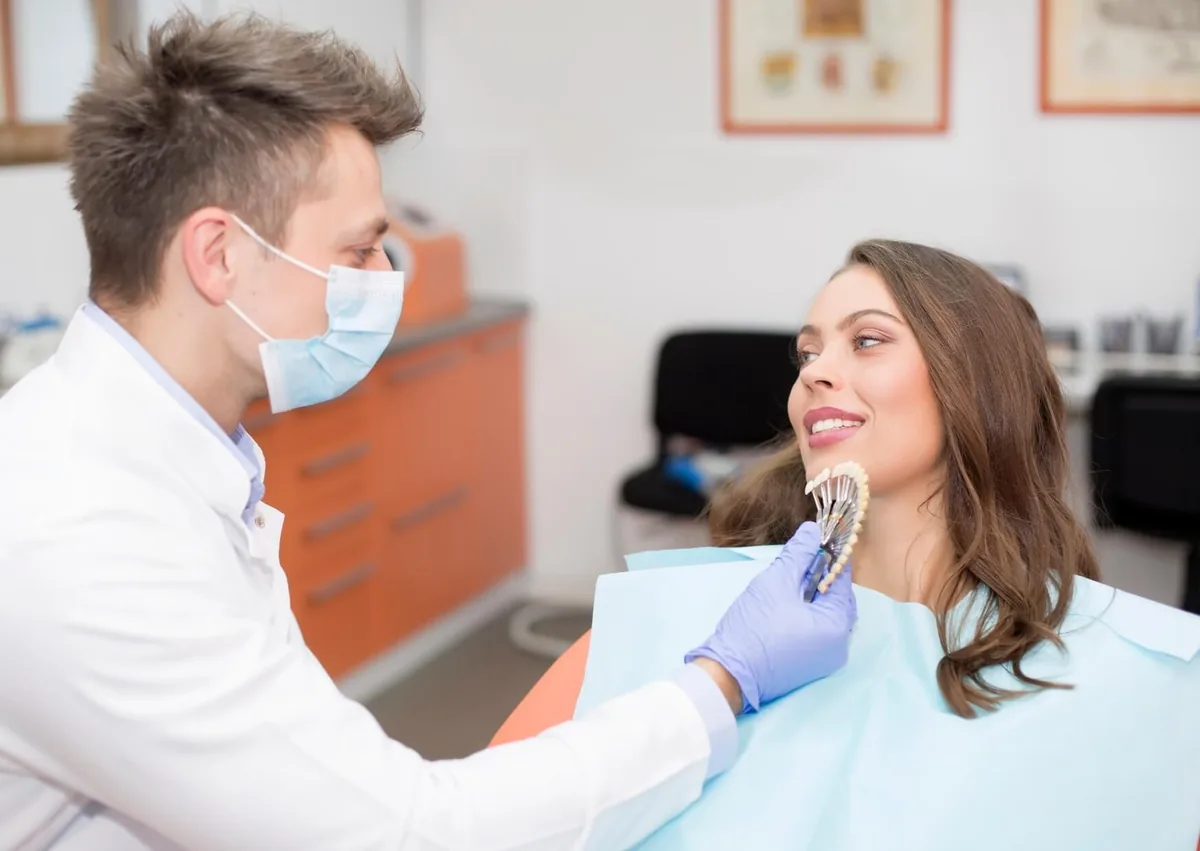
Professional stain removal may suit someone whose veneers are sound but have external discoloration. Repair or replacement may be appropriate when the material itself is discolored, the surface is damaged, or the original shade no longer fits the desired result.
Healthy teeth and gums are important before elective cosmetic treatment. Decay, gum inflammation, a loose veneer, or bite problems may need attention first. Clenching or grinding can also affect the durability of a repair or replacement.
Costs vary with the material, number of veneers involved, condition of the teeth, and treatment required. Cleaning or localized polishing generally involves less treatment and expense than replacement, but request a written estimate rather than assuming what a routine cleaning includes. For broader context, see veneers cost.
Cosmetic whitening and replacement solely for a color preference are often not covered by dental insurance. Ask the office and your insurer to verify benefits, exclusions, and any pretreatment estimate requirements. An estimate is not a guarantee of payment.
Useful consultation questions include:
Schedule a consultation if the shade bothers you or has changed without a clear explanation. Seek prompt evaluation for a newly darkened tooth, a loose veneer, persistent pain, or swelling. Facial swelling with fever needs urgent assessment; difficulty swallowing or breathing requires emergency care.
A brighter result does not always require new veneers. Identifying the cause first helps you choose an option that protects your teeth while addressing the color difference you see.
An evaluation can help you understand why your veneer looks different and which options may improve the match. For cosmetic dentistry in Palm Harbor, FL, call Dental Studio of Palm Harbor at (727) 786-1077 to schedule an appointment.
Whitening strips will not reliably lighten porcelain or composite veneers. They may lighten exposed natural teeth instead, creating a more noticeable shade difference.
If the yellow appearance comes from surface stains or buildup, professional cleaning or polishing may help. If it comes from the restoration’s base shade, bonding material, or underlying tooth, a different treatment may be needed.
Not necessarily, but matching a replacement to neighboring veneers can be challenging. Your dentist can assess whether treating one veneer, several veneers, or only the natural teeth would produce a reasonable match.
Not always; it can reflect a change in the underlying tooth, decay, or another issue that needs assessment. Arrange a dental examination rather than trying to cover the change with whitening products.