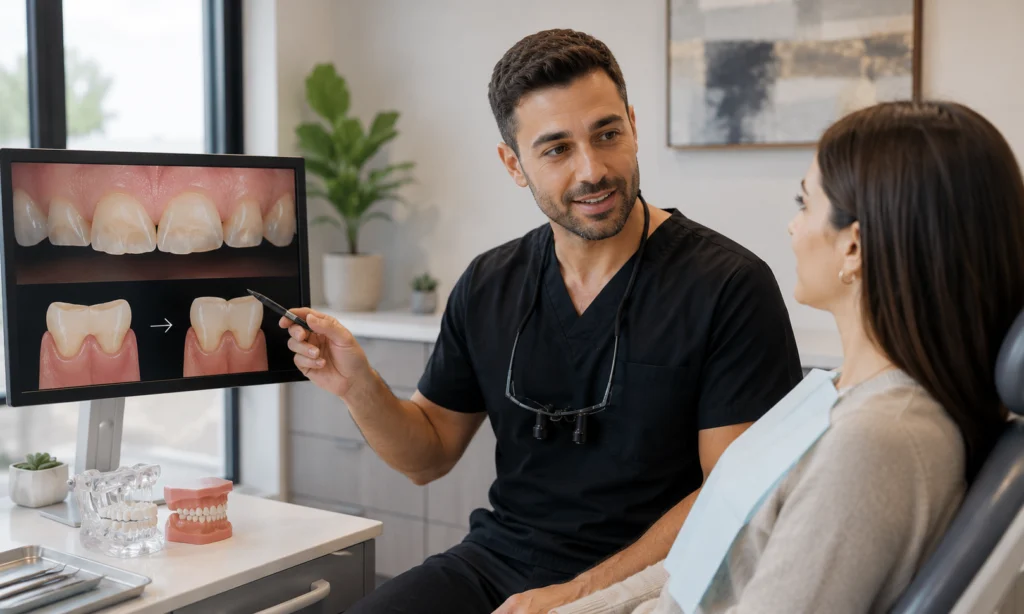
Grinded teeth may be repaired through restorative treatment, bite protection, and correction of the factors causing excessive wear. Teeth grinding can gradually flatten enamel, shorten tooth structure, create sensitivity, and affect smile appearance. At Dental Studio of Palm Harbor, many patients begin with comprehensive evaluations because identifying why teeth wear occurs often helps determine whether protection, restoration, or bite correction may be appropriate. Patients exploring long-term smile preservation often begin with Preventive Dentistry because early detection may reduce future structural damage. Based on the practice philosophy, care emphasizes education, comfort, and whole-patient planning.
What it is:
Treatment for grinded teeth restores damaged enamel, protects remaining tooth structure, and addresses the source of grinding.
Who it is for:
Main benefits:
Limitations:
Timeline / durability:
Minor treatment may require one visit, while larger bite rehabilitation plans may occur over several months.
Teeth grinding commonly develops from repetitive pressure that gradually removes tooth structure.
Bruxism is the clinical term for repeated grinding or clenching behaviors that may gradually wear tooth structure over time.
Common contributing factors include:
Cause → effect → solution:
Grinding pressure → enamel wear → restorative and protective treatment
Example: A patient who clenches during sleep for several years may develop flattened front teeth and increased tooth sensitivity.
According to the American Dental Association, chronic grinding may contribute to enamel loss, jaw discomfort, and structural tooth changes.
Teeth grinding often creates visible and functional changes before patients notice severe damage.
Common symptoms include:
Example: A patient with morning headaches and shortened front teeth may have ongoing nighttime grinding patterns.
If symptoms increase over time, providers may evaluate bite forces and wear patterns.
Dental evaluations identify both structural damage and the source of wear.
Diagnostic findings often include:
Example: A patient with uneven tooth wear may receive imaging and bite evaluation to determine whether clenching forces affect multiple areas.
Dental Studio of Palm Harbor emphasizes education and individualized planning designed around long-term oral health decisions.
Minor grinding damage may respond to conservative restoration techniques.
Treatment options may include:
Cause → effect → solution:
Minor enamel wear → surface irregularities → conservative restoration
Example: A patient with chipped edges on front teeth may restore appearance through bonding treatment.
Patients concerned about preserving healthy tooth structure often explore Preventive Dentistry because ongoing monitoring may identify future wear patterns.
Moderate grinding damage may require rebuilding tooth shape and function.
Treatment options commonly include:
Patients with worn front teeth sometimes explore Veneers because veneers may help restore shape and smile appearance after grinding-related wear.
Example: A patient with shortened front teeth and multiple fractures may require restoration that rebuilds appearance and chewing function.
Cause → effect → solution:
Progressive enamel wear → structural weakening → restorative treatment planning
Severe tooth grinding may change bite relationships and chewing mechanics.
Severe wear may contribute to:
Patients with extensive structural wear sometimes require Dental Crowns because crowns may help rebuild tooth structure and chewing function.
Example: A patient with significant tooth shortening across multiple areas may require full-mouth restoration planning.
Patients with jaw symptoms sometimes benefit from TMJ Treatment because grinding forces and bite mechanics frequently overlap.
Night guards and restorations serve different treatment purposes.
| Treatment | Purpose | Typical Use |
| Night guard | Protects existing teeth | Active grinding habits |
| Bonding | Repairs small defects | Minor wear |
| Veneers | Restores appearance | Front tooth damage |
| Crowns | Rebuilds structure | Moderate-to-severe wear |
| Bite rehabilitation | Restores function | Extensive damage |
Example: A patient with mild grinding but limited wear may only require a protective appliance, while extensive wear often needs restoration plus long-term protection.
Bite imbalance may increase repetitive pressure on specific teeth.
Bite-related findings may include:
Cause → effect → solution:
Uneven bite pressure → concentrated force → bite correction planning
Example: A patient missing back teeth may overload front teeth and increase wear.
Teeth grinding may continue if underlying causes remain untreated.
Long-term recommendations often include:
Example: A patient who restores worn teeth without bite protection may continue damaging remaining enamel.
If grinding forces remain active, providers may recommend additional protective measures.
No. Enamel does not regenerate naturally. Treatment typically restores lost structure through restorative procedures.
Yes. Bonding may help restore minor wear, chips, and small shape irregularities.
No. Treatment depends on severity. Mild wear may only require conservative restoration.
No. Night guards protect teeth from additional wear but do not rebuild lost structure.
Tooth grinding may permanently wear enamel because enamel does not naturally regenerate. Dentists may restore damaged areas depending on severity.
No. Some patients grind during sleep while others clench during daytime activities.
Tooth wear may affect smile appearance, chewing efficiency, sensitivity levels, and bite balance differently depending on the amount of enamel loss and the forces causing damage. Identifying the cause often helps determine whether protective treatment, restorative procedures, or bite correction may be appropriate.
If you are noticing flattened teeth, jaw soreness, sensitivity, chipped edges, or changes in your bite, several contributing factors may be involved. If this applies to your situation, evaluating tooth wear patterns and functional changes may help clarify treatment pathways.
Dental Studio of Palm Harbor provides individualized evaluations that may help determine whether restorative treatment, protective appliances, or long-term bite planning fit your specific condition. Patients may request a consultation to evaluate tooth wear and discuss treatment options that support long-term oral health goals.