A common real-life moment goes like this: you bite into something ordinary like toast, nuts, or a crusty sandwich and feel a quick jolt in one tooth. Then the pain fades so fast that it is easy to brush off.
That stop-and-start pattern is one reason cracks get missed. A cracked tooth often hurts when you bite down or release pressure, not all the time, so many people wait until the tooth becomes more inflamed and harder to treat.
If you are wondering, “what does a cracked tooth feel like?”, the answer is often frustratingly inconsistent. Symptoms may be sharp, brief, deep, or hard to pinpoint, especially in the early stages.
The most misleading part is often not severe pain. It is the on-and-off pattern that makes the problem seem minor when it may not be.
Dental Studio of Palm Harbor's general dentistry team in Palm Harbor, FL offers the kind of exam and same-day evaluation this issue often requires.
A tooth is not one solid piece. It has a hard outer layer called enamel, a middle layer called dentin, and a soft inner tissue called the pulp, which contains nerves and blood vessels.
When a tooth has a crack, the two sides can flex slightly during chewing. That small movement can irritate the dentin, the pulp, or the ligament around the root, which helps explain why the pain can feel sudden, sharp, and inconsistent.
This is a common trap. If the tooth only hurts with certain foods or at certain angles, it is easy to keep chewing on it and hope it settles down.
But repeated biting can put more stress on the crack. Over time, the tooth may become more sensitive, more inflamed, or split further.
This is one of the classic signs. The tooth may feel fine at rest, then produce a quick stab of pain when you chew firmer foods.
Some people notice it most when biting on one cusp, which is the pointed part of a back tooth. Others feel it only with certain textures, such as granola, seeded bread, or ice.
This detail matters. Pain when pressure is released can happen when the cracked parts of the tooth shift back after you stop biting.
That pattern is less typical of simple sensitivity alone. Dentists often ask about it because it can be a useful clue that a crack is present.
A cracked tooth may react to cold air, cold water, or chilled foods. If the sensitivity lingers instead of fading quickly, that can suggest the inner nerve tissue is becoming more irritated.
Not every cold-sensitive tooth is cracked. Cavities, exposed roots, worn enamel, and recent dental work can cause similar symptoms.
Some cracks do not cause a dramatic zap. Instead, you may notice a vague ache on one side of the mouth, especially during meals.
This can make self-diagnosis unreliable. Patients often point to the wrong tooth because pain can travel through nearby structures.
If the crack extends deeper, the surrounding gum may become tender. In some cases, there may be localized swelling or discomfort when floss catches in one area.
That does not always mean infection, but it does deserve prompt evaluation.
A cracked tooth is not the only cause of pain with chewing or temperature changes. That is why a proper exam matters.
Other problems that can feel similar include:
One practical clue is this: if the pain is repeatable with pressure on a specific tooth, a crack moves higher on the list. If symptoms are diffuse, constant, or linked with facial pressure, the cause may be different.
Back teeth handle the highest chewing load. They also often have large fillings, wear from grinding, or older dental work that leaves less natural tooth structure to absorb force.
That is why molars and premolars are common sites for cracks. A lower molar may be especially noticeable because it takes strong biting pressure during everyday meals.
The pattern is familiar. A tooth feels slightly sensitive, so you chew on the other side, then go back when the pain settles, and repeat the cycle.
That delay can stretch on for weeks or months. A simple next step is to stop testing the tooth with hard foods and book an exam while the symptoms are still intermittent.
Some cracks stay limited to the outer tooth structure. Others extend deeper and threaten the nerve or root.
Seek prompt dental care if you notice swelling, severe pain when biting, or temperature sensitivity that lingers and worsens. These can be signs of deeper inflammation or infection.
Other red flags include:
If there is facial swelling, fever, or trouble swallowing, urgent evaluation is important. Those symptoms go beyond routine tooth sensitivity.
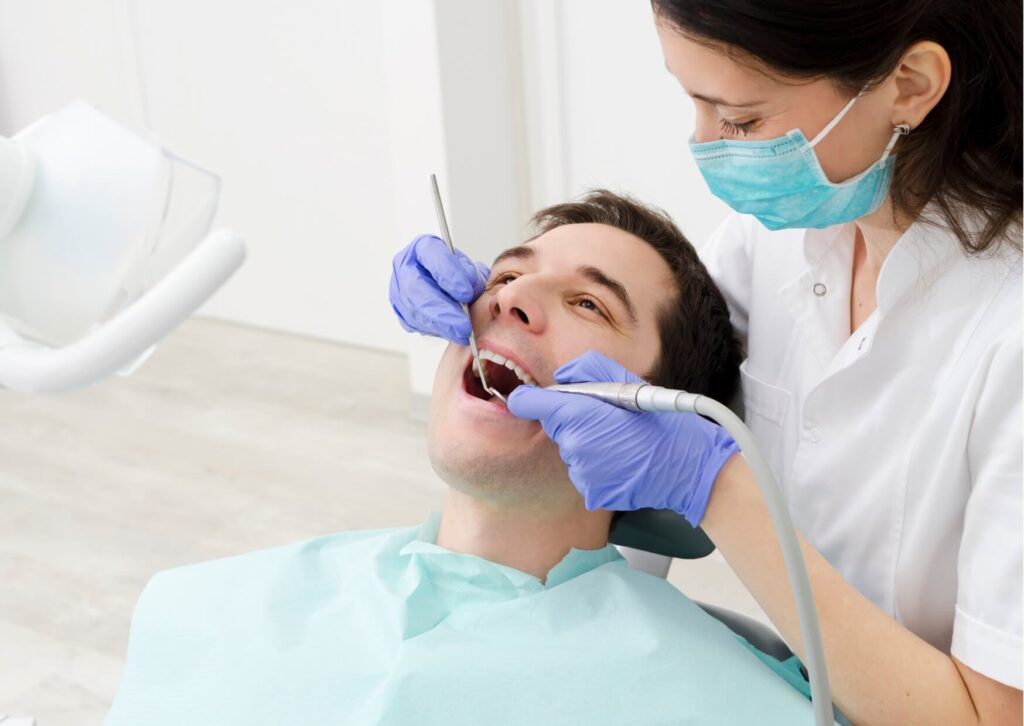
Diagnosis is usually based on a combination of clues, not one single test. Your symptom history matters a lot, especially whether the pain happens when biting, on release, with cold, or only with certain foods.
A dentist may:
Many cracks do not show clearly on standard X-rays, especially early on. That is one reason symptoms should not be ignored just because imaging looks normal at first.
A common example is a patient who only feels pain when chewing almonds on one side. The exam may look almost normal until bite testing isolates one cusp and reproduces the exact pain pattern.
Treatment depends on where the crack is, how deep it goes, and whether the pulp is inflamed. The goal is to stabilize the tooth and reduce movement across the crack.
In many cases, a dental crown may help protect a cracked tooth by holding the remaining structure together during chewing. If the nerve has been significantly affected, root canal treatment may also be needed before or after the final restoration.
If the crack extends too far below the gum or the tooth is split in a way that cannot be predictably repaired, extraction may be the safest option. If extraction is needed, dental implants are a common restorative option to replace the missing tooth and restore function and appearance.
This is where early action matters most. A tooth that hurts only occasionally today may be much more treatable than one that becomes constantly painful next month.
Do not keep testing the tooth to see if it still hurts. Repeated pressure from hard or crunchy foods can aggravate the crack.
Try these simple steps:
General comfort measures may help temporarily, but they do not repair the crack itself. If the tooth is becoming more reactive, that change is worth taking seriously.
Most importantly, online information can explain patterns, but it cannot confirm which tooth is involved or how deep the problem goes. A dental exam is the safest next step when symptoms fit a possible crack.
If you suspect a cracked tooth, Dental Studio of Palm Harbor's general dentistry team in Palm Harbor, FL, serving nearby Clearwater and Dunedin, can help. Call us at (727) 786-1077 to schedule an exam.
Yes. Intermittent pain is common, especially early on. The crack may only flex under certain chewing forces or temperatures, so symptoms can come and go.
No. Many cracks are too fine or oriented in a way that makes them hard to see on standard dental X-rays. Dentists often rely on symptom patterns, exam findings, and bite testing.
Yes, sometimes. Both can cause sensitivity and pain with chewing, which is why a professional exam is important.
Not always, but it can become urgent if there is severe pain, swelling, a visible split, or rapidly worsening symptoms. Facial swelling, fever, or trouble swallowing should be assessed urgently.
No. Natural tooth structure does not fuse back together once it is cracked. Symptoms may settle temporarily, but the tooth still needs evaluation.