Full mouth dental implants typically cost about $25,000 to $50,000 per arch in the United States, or roughly $50,000 to $100,000 for both arches. The final price depends on the type of restoration, number of implants, preparatory treatment, materials, and whether the quote includes every phase of care. For a broader look at implant pricing, see cost of dental implants.
A higher fee does not automatically mean a better result. Full mouth implant quotes can vary because some include only surgery, one arch, or temporary teeth, while others include the complete treatment plan.
If you're weighing options because many teeth are failing or dentures no longer fit, dental implants can clarify whether a fixed or removable full-arch solution best suits your needs. Dental Studio of Palm Harbor in Palm Harbor, FL explains the benefits and practical steps so you understand costs, expected timelines, and what to expect during treatment.
“Full mouth dental implants” usually means replacing all teeth in the upper jaw, lower jaw, or both with an implant-supported restoration. Instead of placing one implant for every missing tooth, a dentist usually places several implants to support a full arch of teeth.
That restoration may be fixed or removable. A fixed full-arch bridge stays in place and is removed only by a dental professional, while an implant-retained overdenture snaps onto implants but can be removed at home for cleaning.
For many patients, the goal is not just replacing teeth. It is restoring steadier chewing, clearer speech, a more natural appearance, and better day-to-day confidence.
The number of implants is only one part of the total fee. Planning, surgery, temporary teeth, the final prosthesis, lab work, follow-up visits, and long-term maintenance all affect the overall cost.
Important cost factors include:
Complex anatomy, severe bone loss, or a history of failed dental work can increase cost. A lower quote may end up costing more if it leaves out grafting, sedation, temporary teeth, or later repairs.
A restorative dentistry consultation should compare stability, appearance, maintenance, longevity, and price. The estimates below are broad U.S. ranges for education, not treatment quotes.
Option | Approximate U.S. Cost | Main Benefit | Important Limitation |
|---|---|---|---|
Conventional complete denture | $1,000 to $4,000 per arch | Lowest initial cost and no implant surgery | May move, reduce chewing efficiency, and require relining or replacement |
Implant-retained overdenture | $6,000 to $20,000 per arch | Better retention at a moderate implant cost | Must be removed for cleaning and has replaceable attachment parts |
Fixed full-arch implant bridge | $25,000 to $50,000 per arch | Strong stability and does not come out at home | Higher cost, surgery, and careful cleaning underneath are required |
Individual implant crowns or segmented bridges | Often $40,000 to $80,000 or more per arch | Can provide separate tooth units and detailed customization | Usually requires more implants, adequate bone, and greater expense |
Conventional dentures may suit someone who wants to avoid surgery or needs the lowest upfront cost. Implant overdentures can be a practical middle ground when better stability matters but a fixed bridge is out of budget.
Fixed full-arch teeth often feel more secure than dentures, but they are not the same as natural teeth. They still require careful cleaning, regular maintenance, and realistic expectations about wear, repairs, and long-term health around the implants.
Full mouth implants can last many years and sometimes decades, but no option is maintenance-free. Research on implant success shows that smoking, uncontrolled diabetes, poor oral hygiene, gum disease history, grinding, and heavy bite forces can affect outcomes.
The implants themselves may last longer than the visible teeth attached to them. Acrylic teeth can wear down or chip, overdenture attachments need periodic replacement, and even zirconia restorations can develop mechanical problems.
Future costs may include cleanings, exams, X-rays, night guards, relines, screw replacement, or prosthesis repair. Before starting treatment, ask what maintenance is expected and what any warranty does and does not cover.
Treatment starts with an exam, health history, imaging, and a discussion of your goals. A cone-beam CT scan may be used to evaluate bone, nerves, sinuses, and implant positions.
During surgery, the area is numbed with local anesthetic. If appropriate, sedation may also be offered, and most patients feel pressure and vibration rather than sharp pain while the area is fully anesthetized.
After surgery, soreness, swelling, bruising, and a soft-food diet are common for a period of time. Some patients receive teeth quickly, but same-day teeth are usually temporary, and the implants still need time to heal and integrate with the bone.
Healing often takes several months. The final teeth are then designed to improve fit, bite, speech, appearance, and cleanability.
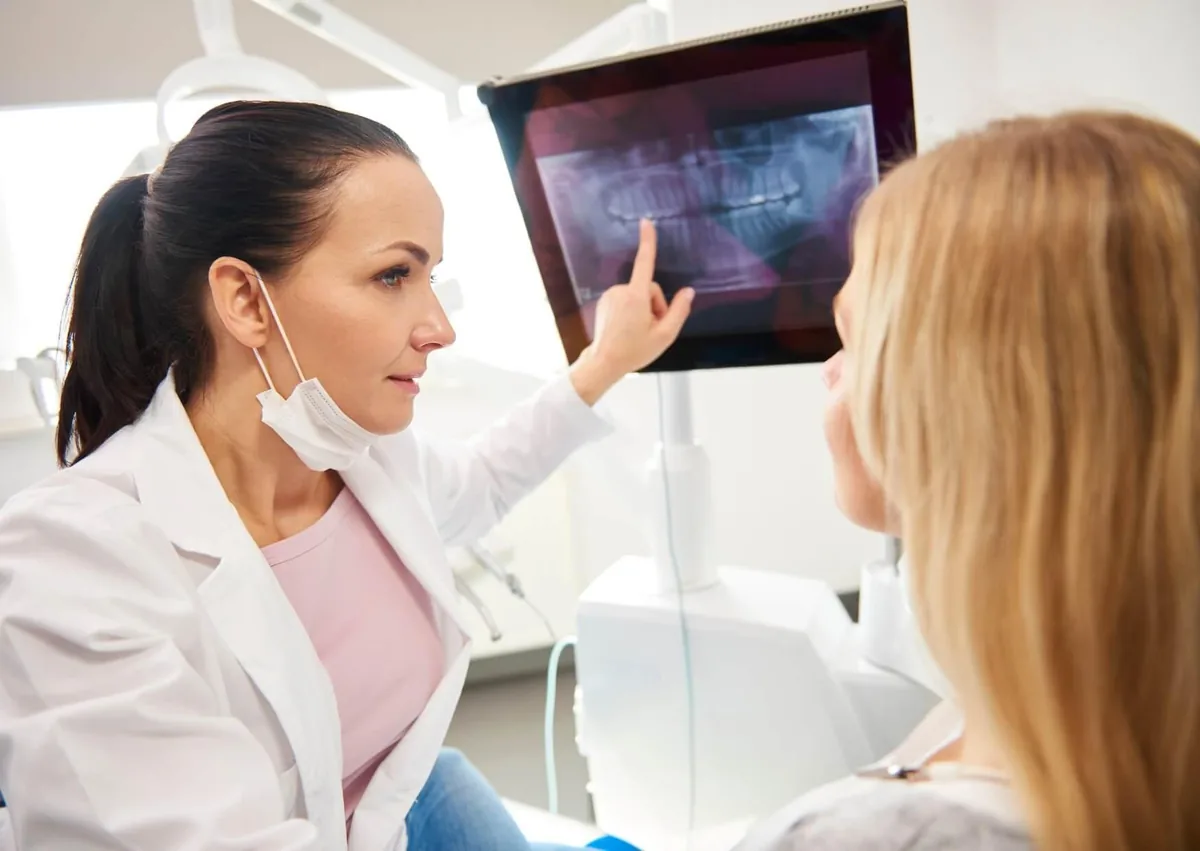
Good candidates often include adults with many missing teeth, severely damaged teeth, or dentures that no longer function well. Adequate bone, healthy gum tissue, reasonable healing ability, and a commitment to daily home care all support more predictable treatment.
Low bone volume does not always rule out implants. Bone grafting, different implant positions, or a removable overdenture may still be possible depending on the case.
Some issues need to be addressed first. Active gum disease, poorly controlled medical conditions, heavy smoking, certain medications, or untreated grinding can increase risk and may change the recommended plan.
Removing teeth that could still be saved is irreversible. A responsible consultation should compare the long-term outlook and cost of saving natural teeth versus extracting them for full-arch replacement.
Dental insurance may help with exams, extractions, dentures, or other parts of treatment, but annual maximums often leave a large balance. Medical insurance may sometimes contribute when treatment relates to trauma, cancer care, or another qualifying condition, but approval is never guaranteed.
Financing can make treatment more manageable month to month. Still, interest and fees can significantly increase the total amount paid.
Ask for a written, itemized estimate that lists the number of arches, number of implants, restoration material, temporary teeth, sedation, grafting, follow-up care, and repair policy. Also ask whether the fee could change after surgery if additional treatment becomes necessary.
Schedule a consultation when missing or failing teeth affect chewing, speech, comfort, or confidence. It is also smart to seek an evaluation when dentures keep loosening, rubbing, or limiting what you can eat.
Earlier evaluation can preserve more treatment choices before bone loss becomes more severe. If a recommendation, extraction plan, material choice, or full mouth dental implants cost estimate seems unclear, getting another qualified opinion is reasonable.
Seek prompt dental care for worsening swelling, fever, pus, uncontrolled bleeding, severe pain, facial swelling, trouble swallowing or breathing, or a loose implant restoration. A useful consultation should leave you with clear options, realistic expectations, and a complete financial outline.
A consultation will let a clinician review your mouth, confirm whether dental implants are appropriate, and provide an itemized treatment plan and estimate. Contact Dental Studio of Palm Harbor in Palm Harbor, FL to arrange an implant consultation, call (727) 786-1077 or schedule online.
Some plans cover limited parts of treatment, but many exclude implants or cap benefits at a low annual maximum. Ask your insurer for a written pretreatment estimate based on procedure codes, while understanding that it may not guarantee payment.
They may have a lower starting price, but travel, return visits, complications, and replacement-part issues can add cost. Check clinician credentials, implant systems, infection-control standards, records access, and follow-up arrangements in the United States.
Implants and temporary teeth can sometimes be placed on the same day. The healing process still takes months, and the final restoration is usually delivered later after stability and bite are reassessed.
A fixed arch often uses four to six implants, while an overdenture may use fewer or more depending on the design and jaw. Bone anatomy, bite forces, implant distribution, and restoration type determine the right number.
Quotes often describe different treatments and include different services. Confirm whether each estimate covers one or both arches, temporary and final teeth, restoration material, extractions, grafting, sedation, imaging, follow-up visits, and future repairs.