The best way to remove plaque from teeth is to brush twice a day with fluoride toothpaste, clean between your teeth every day, and get professional cleanings on the schedule your dentist recommends. Soft plaque can usually be removed at home, but once it hardens into tartar, it needs to be removed by a dental professional rather than scraped off yourself.
If you're managing daily plaque or worried about recurring buildup, preventive dentistry focuses on routine cleanings and personalized home-care plans to reduce your risk. Dental Studio of Palm Harbor in Palm Harbor, FL helps patients maintain healthier gums and fewer cavities through consistent checkups and tailored hygiene guidance.
Plaque is a sticky, nearly colorless film made of bacteria, saliva, and food debris. It forms constantly on teeth, especially along the gumline, between teeth, around dental work, and in crowded areas.
Brush for two minutes twice a day with a soft-bristled manual or powered toothbrush. Angle the bristles slightly toward the gumline, use gentle pressure, and clean every surface instead of scrubbing hard. Consistent home oral care helps lower the risk of cavities and gingivitis.
Clean between your teeth once a day with floss, interdental brushes, or another tool recommended through general dentistry. Toothbrush bristles do not fully reach between teeth, so brushing alone often leaves plaque behind.
Fluoride toothpaste helps strengthen enamel and reduce cavity risk, but it does not replace thorough cleaning. After brushing, spit out the excess and follow the product directions instead of rinsing vigorously right away.
The right plaque-removal routine depends on where buildup collects, how easy the tools are for you to use, and whether you have braces, bridges, implants, or crowded teeth. Many people need more than one tool for complete daily cleaning.
Option | Best Use | Benefits | Limits |
|---|---|---|---|
Manual toothbrush | All exposed tooth surfaces | Effective with good technique; inexpensive | Results depend on consistency and brushing method |
Powered toothbrush | All exposed tooth surfaces | Timers and pressure sensors may improve routine | Costs more and still does not replace interdental cleaning |
Dental floss | Tight spaces between teeth | Reaches narrow contacts and below the gumline | Can be difficult with braces or limited dexterity |
Interdental brush | Wider spaces, bridges, braces, or some gum recession areas | Easy to guide through accessible spaces | The wrong size can irritate tissue or miss plaque |
Water flosser | Braces, implants, bridges, or difficulty using floss | Helps flush around complex areas and may support gum health | May not remove all sticky plaque by itself |
Professional cleaning | Tartar and buildup left behind despite home care | Removes hardened deposits and allows a full exam | Plaque starts forming again after the visit |
No option removes plaque permanently. Daily home care controls new buildup, while visits for preventive dentistry help manage the areas you cannot safely or effectively clean on your own.
If plaque stays on the teeth long enough, minerals in saliva can harden it into tartar, also called calculus. Tartar may look yellow, tan, brown, or black and often feels rough, especially behind the lower front teeth or near the gumline.
Tartar cannot be brushed or flossed away. A dentist or hygienist removes it with specialized instruments and dental technology, such as an ultrasonic scaler that uses vibration and water spray to loosen deposits while protecting the tooth surface.
Do not use metal picks, household tools, fingernails, abrasive powders, or acidic mixtures to try to remove buildup. These methods can cut the gums, scratch restorations, wear enamel, and make it seem like the problem is solved when it is not.
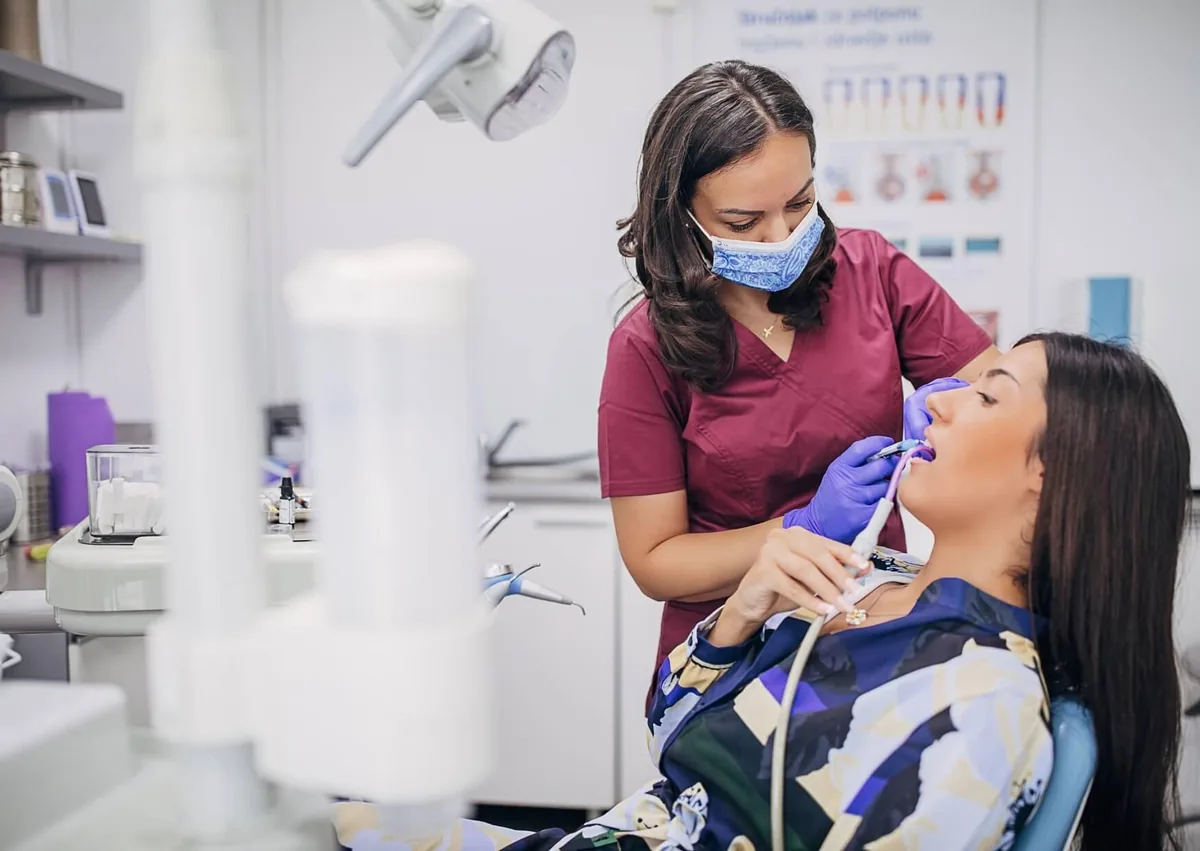
A routine dental cleaning usually includes an exam, removal of plaque and tartar, and polishing to smooth the teeth and reduce surface stain. Most patients notice scraping, vibration, water spray, and mild pressure, but routine cleanings are often manageable without numbing.
If your gums are inflamed or the buildup is heavy, you may have some sensitivity or brief bleeding. Let the clinician know if an area feels painful so they can adjust the approach, give you a break, or discuss local anesthetic if needed.
A routine cleaning may not be enough if deposits extend below the gumline and periodontal disease is present. In that case, a dentist may recommend scaling and root planing as part of broader general dentistry care, followed by periodontal maintenance.
Teeth often feel smoother right away after effective brushing, flossing, or a professional cleaning. Gums that are puffy or bleed because of plaque-related gingivitis may start improving with consistent care, though ongoing bleeding should be evaluated.
Removing plaque can also reduce some causes of bad breath and help prevent cavities and gum disease. Learn more about what a cavity looks like.
Plaque removal does not whiten the natural tooth color, fix internal discoloration, close gaps, or repair decay. If your concern is cosmetic appearance beyond surface cleanliness, you may need a separate dental evaluation.
The results of a professional cleaning last only as long as plaque stays under control afterward. Recall timing varies based on cavity risk, gum health, dry mouth, tobacco use, medical conditions, orthodontic appliances, and any history of periodontal disease.
Anyone with visible hard deposits, rough areas that do not brush away, ongoing bad breath, gum recession, loose teeth, or gums that bleed repeatedly should schedule an exam.
A consultation is also helpful if braces, implants, bridges, crowded teeth, dry mouth, or limited dexterity make daily plaque control difficult.
Seek prompt dental care if you have worsening swelling, pus, severe tooth or gum pain, a bad taste with swelling, or trouble chewing. Facial swelling, fever with dental swelling, trouble breathing, or trouble swallowing needs urgent medical or emergency evaluation.
A dentist or hygienist can tell whether the buildup is soft plaque, tartar, stain, decay, or something else. That matters when symptoms continue despite careful home care, because the right tools and cleaning interval depend on the cause.
For persistent buildup, visible tartar, or ongoing gum inflammation, arrange a preventive dentistry evaluation so a clinician can recommend the right cleaning and maintenance interval. Call Dental Studio of Palm Harbor in Palm Harbor, FL at (727) 786-1077 to schedule an appointment or ask about same-day availability.
Regular brushing and cleaning between the teeth physically remove soft plaque and support the mouth's normal defenses. So-called natural remedies such as lemon juice, vinegar, charcoal, or baking soda are not substitutes and may irritate gums or damage enamel.
Plaque should be disrupted every day with twice-daily brushing and daily cleaning between the teeth. A dentist should recommend the timing of professional cleanings based on your cavity and gum-disease risk.
Some antimicrobial mouthwash may reduce bacteria or support gum health, but it usually does not lift established sticky plaque from tooth surfaces. Mouthwash should support, not replace, brushing and interdental cleaning.
Bleeding often happens when plaque has inflamed the gums, though forceful brushing or improper flossing can also cause injury. Use a gentle technique and schedule a dental evaluation if bleeding is frequent, heavy, worsening, or does not improve.
Professional instruments are designed to remove deposits while preserving tooth structure when used properly. Temporary sensitivity can happen, especially if heavy tartar had covered exposed root surfaces, but that is different from removing healthy enamel.